

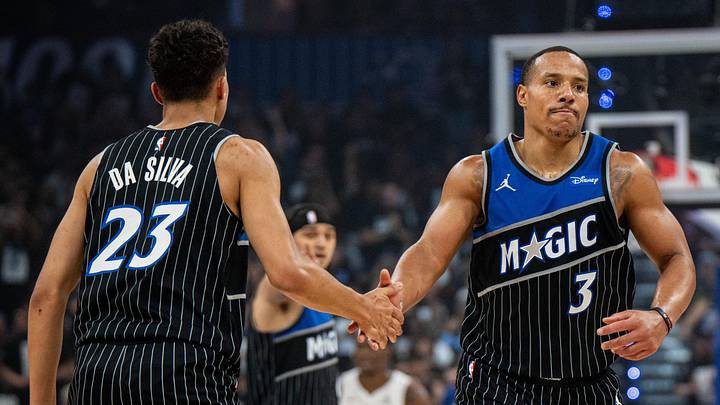
The NBA is shifting in front of our eyes.
Not seismically, of course. It is still vital for a team to have the best players in the league. They are the ones who dot the All-NBA teams and carry their teams through their worst games. Individual brilliance is still essential.
But the league has changed.
The new collective bargaining agreement has made it more difficult to keep teams together and afford them through the apron and tax penalties and limitations. Windows to win titles are getting tighter. Teams that can get players on rookie contracts or at below-max contracts have a huge advantage.
Teams must be creative and get support from players throughout their roster. That balance is far more important now. Teams need multiple ways to attack.
The teams that fell short in the Playoffs were the ones who could not get enough from their supporting cast.
It was the Denver Nuggets not having Aaron Gordon available to ease offensive pressure on Nikola Jokic and Jamal Murray. It was Anthony Edwards and Donte DiVincenzo's injuries gutting the Minnesota Timberwolves' offensive firepower. It was Austin Reaves, Luka Doncic and Kevin Durant's injuries sucking away another way for the Los Angeles Lakers and Houston Rockets to score.
It was Cade Cunningham seeking help from anybody else on the Detroit Pistons -- and finding it in Tobias Harris in Games 5-7 against the Orlando Magic. It was the Boston Celtics not having another way to score beyond the 3-point line.
Star power still matters. But the Orlando Magic ultimately lost their series because when Franz Wagner went out with his injury, the team lost its defensive versatility and a huge piece of their offensive attack. The Magic had no one to fill in or a different way to go about its attack.
Paolo Banchero mostly did his part in the three games they played without Franz Wagner. He scored 45 points in Game 5, led the team in scoring with 17 points, 10 rebounds and six assists with one turnover despite a woeful 4-for-20 showing in Game 6 and finished the series with a pyrrhic 38-point effort.
He was a star closing the series, looking for some help. Help that Cunningham got, and Banchero did not.
The teams that are still playing -- the ones competing for the championship the Magic are pursuing -- have good balance with multiple players capable of taking over games. That is what is necessary to win.
And relying solely on max contracts that can clog up a team's salary sheet is increasingly out of style.
The Magic lacked a bench
The Orlando Magic are one of those teams.
They are virtually locked into their roster at the moment thanks to the max contracts handed to Paolo Banchero and Franz Wagner in the past two summers and $30-plus million salaries to Jalen Suggs and Desmond Bane.
It has given the Magic one of the best starting lineups in the league. But the team's downfall came as injuries piled up -- particularly to those key players -- and the bench could not keep up.
Orlando had one of the lowest-scoring benches in the league this season, revealing a dearth of offensive options that only got worse because of the major injuries the team faced in the starting lineup.
In the Playoffs, the Orlando Magic had 19.7 points per game off the bench, the second-fewest in the leaue ahead of only the Houston Rockets. That followed a regular season where the team averaged only 32.6 points per game off the bench, 26th in the league.
Orlando had its first trio of 20-point-per-game scorers in franchise history, but finding support for them became a huge issue. And that was most evident in the Playoffs when the team was already playing with Franz Wagner, dealing with an injury, and Anthony Black recovering from a long absence.
The Magic were solid when they had all their players available, as Jeff Weltman likes to remind everyone.
Orlando's starting group had a +11.6 net rating in 182 minutes together. Even with Tristan da Silva or Anthony Black in the starting lineup for Franz Wagner, the Magic's starters won their minutes handily (+10.8 points per 100 possessions with da Silva and +6.9 with Black).
But the Magic were getting very little off their bench. The team had to expend most of its offense and ability in the starting lineup.
That made it tough to spread things out and give the team the support it needed. When one of the key scorers went out, the team struggled to make things work together.
That is what the Playoffs are about.
Benches are stepping up in the Playoffs
The one thing the three remaining teams have in the Playoffs are players who have stepped up off the bench and different ways to score from unexpected places.
The Oklahoma City Thunder took Game 3 on the road from the San Antonio Spurs because of Jared McCain's shooting burst. The New York Knicks have gotten huge games from Landry Shamet in their four-game sweep of the Cleveland Cavaliers. The San Antonio Spurs have a standout rookie in Dylan Harper coming off their bench.
In the Playoffs, the Thunder lead the league with 42.2 points per game off the bench. The Spurs (32.0 points per game) and Knicks (31.3 points per game) are both in the top half of the league in bench scoring.
It is not so much the consistency of scoring off the bench as it is the ability to get players to fill in gaps as necessary.
Orlando would have won its series if Jalen Suggs had not shot 7 for 28 (25.0 percent) and 3 for 15 (20.0 percent) from three in the last three games.
They needed a bigger effort from someone like Tristan da Silva -- 4.1 points per game and 31.3 percent shooting from deep -- to help supplement their stars and make the Detroit Pistons pay for leaving them open.
The Magic needed more players to step up and fill in.
This is why more investments in the bench are necessary. This is what the best teams are doing.
And this is why the starter-heavy roster construtions feel so perilous.
Teams still need stars to win. To be sure, the Magic's success still depends on Paolo Banchero and Franz Wagner's development. They need to hit their peaks and be All-NBA-level players.
The differences between the top teams often comes down to bench support. And the Magic are hunting for it again.
 Add us as a preferred source on Google