

When it comes to the NBA Draft, everyone knows the Orlando Magic have a type.
Especially with their later first-round and second-round picks, all you typically need to do is go through the list of the longest wingspans at the NBA Draft Combine to figure out who the Magic are targeting.
Indeed, the old adage that you cannot teach size still rings true. And the Magic, even as a developmental outfit, believe they can teach and grow skills in a lengthy physical prospect.
While rebuilding, a team can certainly cycle through raw prospects and afford a few misses, but the Magic are in a completely different situation now.
Bounded by the restrictions of the first apron and luxury tax and having traded away its available first-round picks until the 2030 NBA Draft, the Magic suddenly find themselves in a spot in the draft where they may not find the perfect prospect and need to maximize every opportunity they have to add talent.
It may be far-fetched to expect anything substantial out of the 46th pick, but the Magic should be aiming to find a player who can contribute.
The only issue is that it requires a compromise. That requires taking a likely flawed player or a player who does not fit exactly what the Magic like. There is no perfect prospect for the Magic.
Increasingly looking at the players who might be targets for the Magic and available when they pick, it is clear what this compromise entails.
A player who has the size the Magic like may not have the shooting that could get the player on the floor. A player with the shooting the team is looking for might be undersized and have to make up for it on a team looking for size.
Who the Magic draft will speak to the prospects that are available when they pick at 46 (or where they trade up and the prospect they target). But it will also speak to what the team actually values and what it feels it actually needs.
Which boxes on the checklist will they overlook to add someone important to the roster?
Size but no shooting
When the Orlando Magic do keep their second-round pick -- and they do end up trading it a lot -- they tend to lean on size and the belief they can teach players to shoot.
That is the problem though with where the Magic are drafting. The players who have all the skills will be long gone. The team will be betting on some flaw they can cover up.
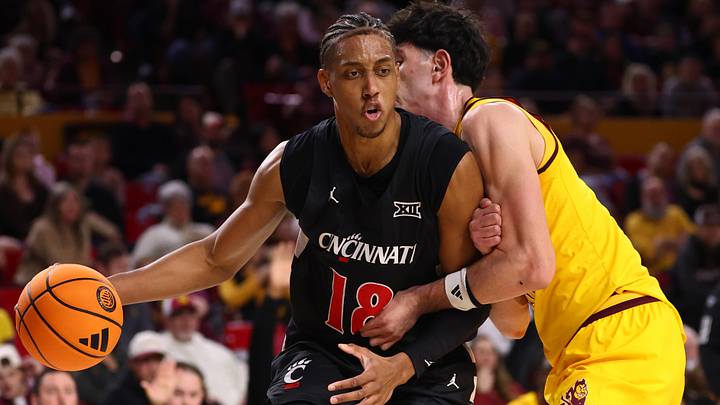
A player like Cincinnati's Baba Miller is a great example of this.
Miller measured at 6-foot-10.5 without shoes with a 7-foot-1.5 wingspan. That helped him gain some momentum and likely will get taken in the 30s rather than fall to the 40s.
Miller checks the size box for the Magic. On top of that, he was an excellent scorer after transferring from Florida State to Florida Atlantic and ultimately to Cincinnati. He averaged 13.0 points per game and a Big 12-leading 10.3 rebounds per game. He figured out how to use his size and has a decent mid-range jumper.
But Miller shot only 29.0 percent from three in his entire college career, including 19.2 percent on 1.7 attempts per game last year. He shot 61.9 percent from the foul line.
Miller looks the part of a Magic-type player. If the team were picking solely on size, he would be the pick -- and 46 with his talent and scoring ability, he would be a great get.
But that is the question: Can the Magic afford to spend another roster spot on a type rather than on a skill they need.
Shooting without size
The Orlando Magic, of course, could swing in the other direction. There are plenty of players that have the shooting and scoring chops, but might not have the size the team typically likes.
The Magic drafted a smaller point guard last year in Jase Richardson, hoping his scoring and shooting would make up for his size. The jury might still be out on that as Richardson spend most of the year on the bench.
A player like Ohio State guard Bruce Thornton has a lot of the skills the Magic are looking for.
At 6-foot without shoes and a 6-foot-5 wingspan, he is on the smaller side. But Thornton is bigger, carrying a little more weight, to be a better defender. He was one of the most efficient scorers at the rim last year without dunking.
Thornton averaged 19.9 points per game -- and averaged more than 15 points per game in his last three seasons. He added 3.9 assist sper game last year after two seasons with more than 4.0 assists per game. He shot 40.0 percent from three, his second year shooting better than 40 percent.
If the Magic can get over his size, he would be a solid addition.
Someone like Vanderbilt's Tyler Nickel also fits this description.
Nickel averaged 13.5 points per game and shot 40.0 percent on 7.6 3-point attempts per game last year. He measured at 6-foot-6 without shoes and a 6-foot-8.5 wingspan.
Nickel would be a pure shooter for the Magic, which is something they need. But the Magic have plenty of reasons to be hesitant about players like that.
It is the same rationale that might determine whether the Magic chase Purdue's Braden Smith.
Smith is the NCAA's all-time leader in assists after averaging 14.3 points and 8.8 assists per game (while shooting 36.2 percent from three and 38.5 percent in his four-year career). But Smith also measured as the shortest player at the Combine at 5-foot-10.25 without shoes (and a 6-foot-3.25 wingspan).
Taking Smith would go very much against the Magic's type. Are his other skills enough to make up the difference?
That is essentially the question the Magic are asking about any number of prospects. And the ones they are likely comfortable with are the ones who might be gone by the time the Magic are picking.
Assuming the Magic stick to the 46th pick, they will likely need to be clear on what their play can do and how that can help the team. And hope the things that they do not typically go for do not come back to haunt them.
 Add us as a preferred source on Google