

The story of this summer's offseason might be the fans' awakening to the realities of the NBA's new team-building rules and how much the league has mimiced a hard cap.
The never-ending Kawhi Leonard investigation introduced ideas of cap circumvention to the mix.
But the Boston Celtics' shocking decision to trade Jaylen Brown had more to do with their finances than their on-court play. The Oklahoma City Thunder shed valuable players from their roster in pure giveaways to reduce their tax bill. The Denver Nuggets held Peyton Watson in limbo because of their fears about entering the second apron.
In many cases these teams did exactly what they were supposed to do: They drafted well, took care of their own players and reaped the benefits of success. If there is frustration in the league right now, it is that being homegrown becomes too expensive too quickly.
Or maybe it is about a transitioning mindset. It always takes time to adjust to new rules -- and there was a smoothing of penalties to ease that transition. Many general managers operated as usual, choosing to deal with the fallout later.
Even as Jeff Weltman warned of a more expensive future, the Orlando Magic's president of basketball operations still seemed to operate in that old world and frame of thinking.
He gave big extensions to all the players he drafted -- and other big extensions to Jonathan Isaac and Wendell Carter. Many seemed above-market. His two max contracts were negotiated with little efort or fanfare, gaining criticism around the league at the time.
It has put the Magic in a big financial hole as some players have struggled to meet those heightened expectations.
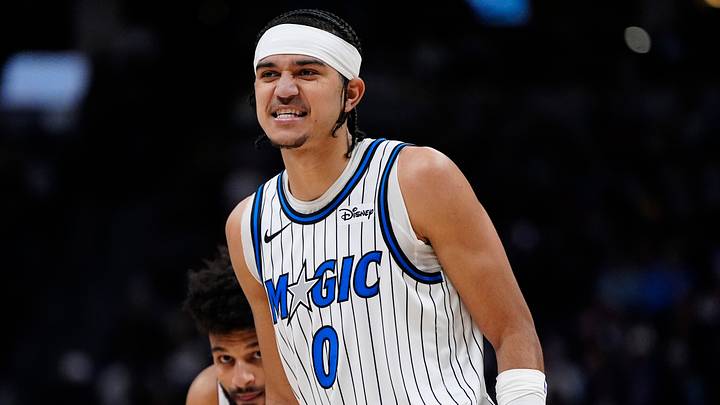
That shift is at the heart of the last big debate of the Magic's offseason: Cap realities have the Magic seemingly hitting pause when it comes to Black.
Black's extension itself is a difficult thing to solve. He had a breakout season last year, averaging 15.0 points per game and carrying the team through December and January. He is clearly due a massive payday considering his still unrealized potential and what he showed last year.
His value has danced around from the optimistically low $20 million annual average value to Black asking for money similar to what Suggs got. The divide in opinions would seem to suggest a deal will not be struck until next summer, allowing Black to hit restricted free agency.
Jake Fischer said on his livestream show on Bleacher/Report that the Magic have to figure out how to fit Jalen Suggs and Anthony Black together on their cap sheet, but that there is some optimism that a deal can get done.
Under the old cap system, perhaps this would not be much of a debate. There would not be much concern. But this new cap system has brought up loads of other questions.
Black is at the center of it. And the Magic need to change their mindset of how they manage their cap sheet. It is how they have put themselves in a tricky spot, unable to cleanly retain a key player.
The old mindset
The NBA's soft salary cap system has penalties for going over the luxury tax line as a way of controlling spending. But it was hardly super onerous. If a team was competitive, going into the tax to retain key young players was a no-brainer.
Max contracts were handed out with ease for any young player who showed All-Star potential. Eating up that much of the cap was not a bad thing.
The aprons have changed that. Now being too far over the tax line brings with it restrictions with the kind of transactions you can make and even freezing of draft picks. On top of the financial luxury tax payments.
The Magic drafted players and re-signed their players with much of this old-school mindset. The team filled its roster with massive contracts, investing in their own.
Weltman built a reputation of taking care of his own players. It was a sign that he drafted quality players as the base of his team. When he pushed his chips in for a big trade in Desmond Bane, he knew he was diving headfirst into the luxury tax.
That has come to roost. And Anthony Black seems like he will be the one to pay the price for it.
"If I am the Magic, I really want to keep Anthony Black. But my cap sheet is an absolute mess. There is just not another way to put it," Sam Vecenie noted on Game Theory. "I have three guys making over $40 million in 2027-28. I have Jalen Suggs making about $30 million. I have Wendell Carter making about $20 million. And no one else on the books outside of Tristan da Silva, Jase Richardson and Noah Penda. They only have, against the tax, $18 million in tax space already for next year with like eight guys on the roster. And not including Anthony Black, who is going to make more than $18 million next year."
The Magic did what teams are supposed to do when they are rebuilding. They drafted quality players and stayed invested in them.
Perhaps they overpaid to keep a few. But that is what teams did in the old system. The new system is forcing teams to count their pennies.
It is why Jalen Duren is in a standoff with the Detroit Pistons over a new contract. It is why Victor Wembanyama did not take the full Rose Rule max contract that Paolo Banchero took. It is why Amen Thompson is the only other member of that draft class to sign an extension and few others are expected to reach new deals.
Everyone is trying to save. The Magic are now too.
Anthony Black and a new world
None of this is Anthony Black's fault. And if he feels a bit left out that the Orlando Magic have to play hardball with him, that would be understandable.
But the Magic have to change their mindset in these negotiations. They have to pay the consequences for not anticipating the new world they are in.
Black will likely pay for that with some uncertainty. Someone on the roster will pay for it with a trade to reduce payroll.
There simply is no way for Orlando to retain Black without cutting payroll elsewhere. This is the punishment of the new salary cap system, it inherently pits players against each other.
Orlando will spend this season trying to figure out what this team is.
The Magic brought a lot of players back to get more information. They should get it before making any more future decisions.
Most likely, the Magic will stay on good terms with Black and let things play out. Orlando is so good at taking care of its own players that it is unlikely the team would let Black's situation drag out like others did this summer.
But Black should be seeking a contract with an average annual value of around $23-25 million per year. The Magic should be holding the line on his value with Black and with any trade negotiations needed to clean up their books to fit him.
The Magic got caught in this transition. And now they clearly have some tough decisions ahead.
 Add us as a preferred source on Google