

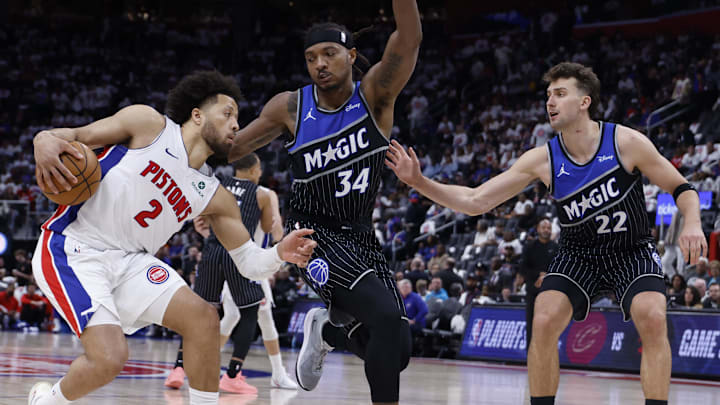
DETROIT -- The Orlando Magic put in a throwback effort in the first half of Game 2. Despite a horrid shooting performance, their defense kept them in the game. It was a lifeline to be tied at the break. They could hang with the big, bad Detroit Pistons, even with their trademark poor shooting.
But the Pistons, for all the frustrations they had through the first six quarters of this series, are still a 60-win team. They are still a team with an elite defense. They can still tighten the screws.
And the Magic are who they are. As much as they are trying to overcome their frustrating season and ride the wave of their last two wins, they are still a team that struggles offensively and struggles from deep. They are still a team looking for relief.
In a scene reminiscent of their worst moments this season, the Pistons opened the third quarter with a 28-3 run that never seemed to end. Orlando found no breathing room to create offensively and let mistakes compound on defense as the deficit grew.
The Pistons did what a top seed is supposed to do in a 98-83 victory in Game 2, evening the series as it shifts to Orlando this weekend. The Magic head home with this sort of empty feeling.
"We were solid throughout tonight until that third quarter," Jalen Suggs said after Game 2. "We just stayed in that low too long and let them grow the lead. Whether it be getting better shots on offense or getting stops, during those stretches, we have to do one at a high level. We didn't do either, and they took advantage of it.
The Magic got a cold reminder of their inconsistencies in the defeat. This is why they are the 8-seed on the road facing the East's top team.
In the end, this series is more about the Magic finding a way to execute and score. The Pistons ramped up their defense and shut the door on the Magic in the third quarter.
Missed opportunities
Everyone knew in the days between Games 1 and 2 that the Detroit Pistons were scheming how to be more physical and push the Orlando Magic around. Everyone expected the Magic would be dealing with more fouls and more pressure on the ball.
For much of the first half, the Magic handled it well.
But from the start, the Magic gave away those opportunities. They missed seven free throws in the first half, going 14 for 21. Paolo Banchero was 3 for 7. Even Desmond Bane missed one.
That was not the only missed opportunity.
The Magic managed only four points off 11 offensive rebounds in the first half. They had only 10 points off 12 turnovers in the first half.
In a tie game at halftime, all of those missed chances were killer. They were opportunities left on the board that they could not get back. That left the door open for a big run.
"That's part of the game. I think they did a heck of a job reaching and grabbing and holding and turned us over," coach Jamahl Mosley said after Game 2. "They were timely turnovers. You have to give them credit for how they came out and protected the paint. It would be one thing if we weren't getting there. But we were getting downhill. Now it comes down to the decision-making once we do get into the paint because they collapse very well."
Even though Orlando was fortunate to be tied at 46 at the half after shooting 32.6 percent from the floor -- and missing loads of open shots (3 for 14 from three overall) and paint shots (9 for 22) in the process -- those missed opportunities would haunt them.
The poor shot-making and poor execution killed them in the third when the free throws dried up.
Lagging offense
It is no secret that the biggest mystery in this series is whether the Orlando Magic can execute offensively well enough against the Detroit Pistons to stay competitive.
The one thing they cannot do is give away possessions and let the Pistons get out in transition. This series will be won on the margins and in that possession game.
Throughout the Pistons' run, it came down to the Magic's inability to get shots in the paint and the Pistons using long misses to charge their fast break and catch the Magic before they could get set.
Orlando looked lost dealing with a suddenly ramped up Detroit defense on the road.
"I think we just got a little disorganized offensively, and they tried to speed us up with ball pressure and not let us get into what we're trying to get to," Paolo Banchero said after Game 2. "I think it is more us not being on the same page to start of the quarter and they took advantage."
Detroit flipped the script in the paint, outscoring Orlando 54-34 and keeping the team to 17-for-40 shooting in the paint. Orlando went just three for eight in the paint in that tell-tale third quarter.
The Magic also struggled from deep shooting 8 for 32, with Desmond Bane especially struggling at 2 for 7 and Jalen Suggs at 3 for 10. This is despite another bevy of open attempts.
Orlando could not string together makes at that critical juncture, and the team committed seven turnovers in the third quarter. Orlando finished with 19 turnovers for 18 Pistons points as Detroit tightened the clasp around Orlando's offense.
"I think they came out and turned up their physicality," Bane said in the locker room after Game 2. "We turned the ball over. I had two turnovers. Allowed them to get out and run. I just don't think we took care of the ball. We started playing a little fast and outside of ourselves."
That is how this run -- or the 31-0 run against the Toronto Raptors or 17-0 run against the Houston Rockets earlier this season -- happens so frequently. The Magic continually stub their toe offensively, and things snowball from there.
This has been their Kryptonite all season. This has been their Kryptonite for a decade.
The Magic's defense was more than capable. But the team continues to run into this issue that its defense alone is not enough. Not without an offense to match.
Orlando continues to bury itself in its own mistakes.
"I think one being level-headed, knowing runs are going to happen and mistakes are going to happen," Franz Wagner said in the locker room after Game 2. "Usually, those big runs happen because you don't play consistently. When turnovers like that happen, the game is easy for them, and it's tough to get out of that. You've got to consistently create good looks. You have to be organized, and I don't think we did a good job of that."
Orlando has rediscovered its defensive grit that built this program and this consistent playoff run. What is holding this team back is the same inconsistencies and lack of attention to detail that it has always had.
 Add us as a preferred source on Google